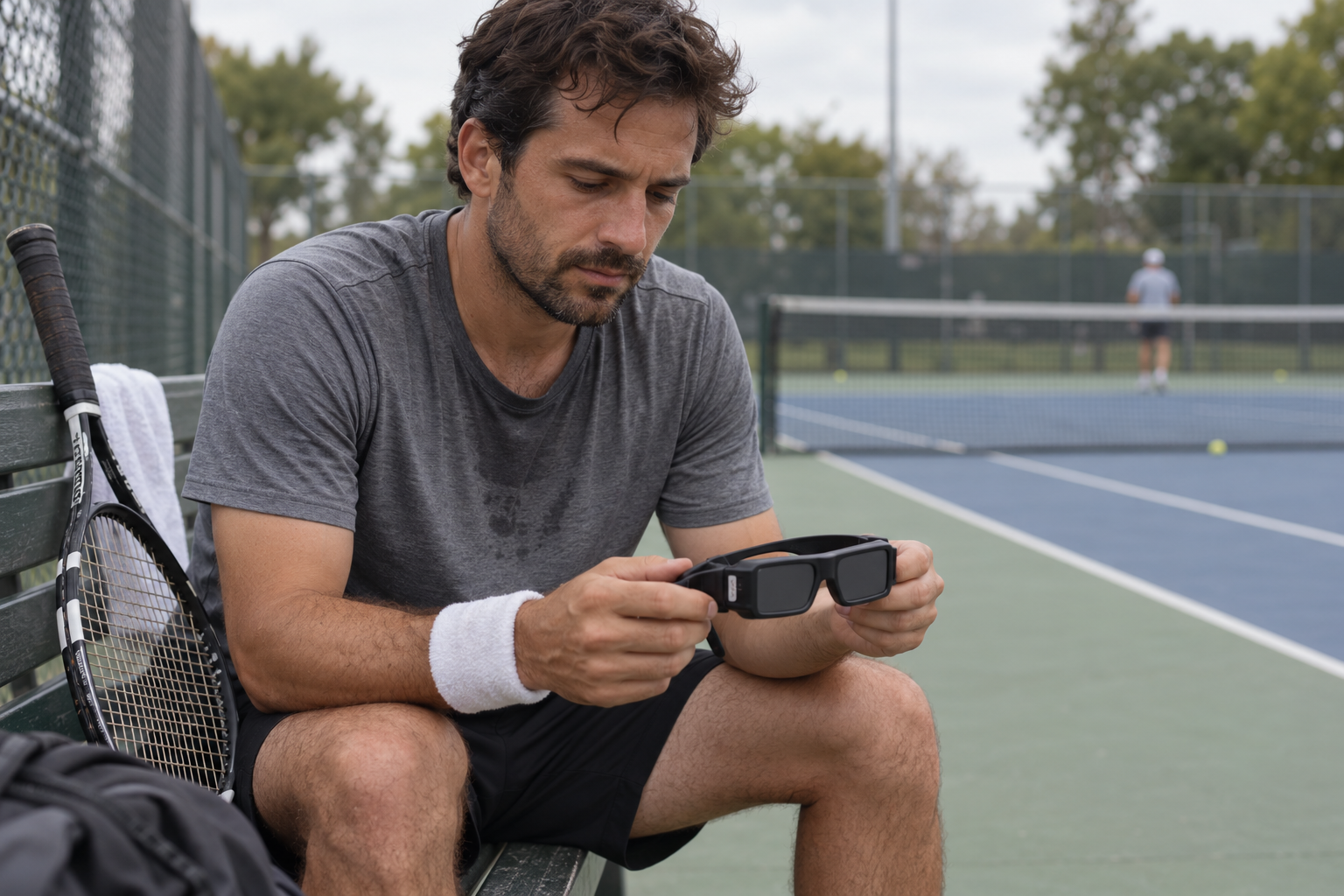
Vision training attracts strong claims because it feels advanced. That is exactly why it needs tighter language.
The strongest use of stroboscopic work is not as a miracle category. It is as one tool that may sharpen parts of the reaction system under constrained visual conditions.
What the review supports
A 2025 systematic review and meta-analysis reported significant improvement in athletes' reaction time after stroboscopic visual training, while decision-making effects were less clear.[1] That is a useful distinction. Reaction speed and decision quality are related, but they are not interchangeable.
This makes the evidence more believable, not less. It points to a real possible benefit without pretending every layer of performance moves equally.
Why transfer still needs caution
Broader perceptual-cognitive training research shows a familiar pattern: strong improvements in training tasks, smaller improvements once the game becomes fully real again.[2] That should shape how you talk about stroboscopic work too.
If the drill never reconnects vision to sport-specific action, the most impressive part of the progress may stay inside the drill.
How to use it well
- Use it as a complement, not a replacement, for tennis-specific practice.
- Care more about carryover than novelty.
- Pair constrained vision with a directional or timing response whenever possible.
- Avoid exaggerated promises about decision-making unless the full task supports them.
The most convincing vision training is the kind that still leaves you better prepared for a real ball, not just better adapted to the training tool.